


Corporate event staging is often misunderstood as simply building a platform and placing a branded backdrop behind it. In reality, staging is one of the most strategic components of live event production. It shapes perception, reinforces brand identity, and directly impacts how messaging is received.
Whether you’re producing a general session for a leadership summit or unveiling a new product to the market, corporate event staging is not decoration; it is communication.
Let’s break down what corporate event staging really means, how it differs between formats, and why intentional design is critical to successful execution.
What Is Corporate Event Staging?
Corporate event staging is the strategic design and construction of stage environments that support brand messaging, executive presence, and audience engagement.
It includes:
- Stage architecture and scenic design
- LED walls and projection integration
- Lighting design
- Screen placement
- Presenter flow and sightlines
- Camera framing for hybrid audiences
- Structural and technical planning
Staging sets the tone before a word is spoken. It communicates scale, authority, and intention. When done well, it feels effortless. When done poorly, it distracts.
Why Stage Design Shapes Perception
In corporate environments, perception is credibility.
A narrow stage with flat lighting can make leadership feel small. Poor sightlines can disconnect remote audiences. Oversized screens without thoughtful integration can overwhelm messaging.
Corporate stage design influences:
- Executive presence
- Audience focus
- Energy level
- Visual hierarchy
- Brand alignment
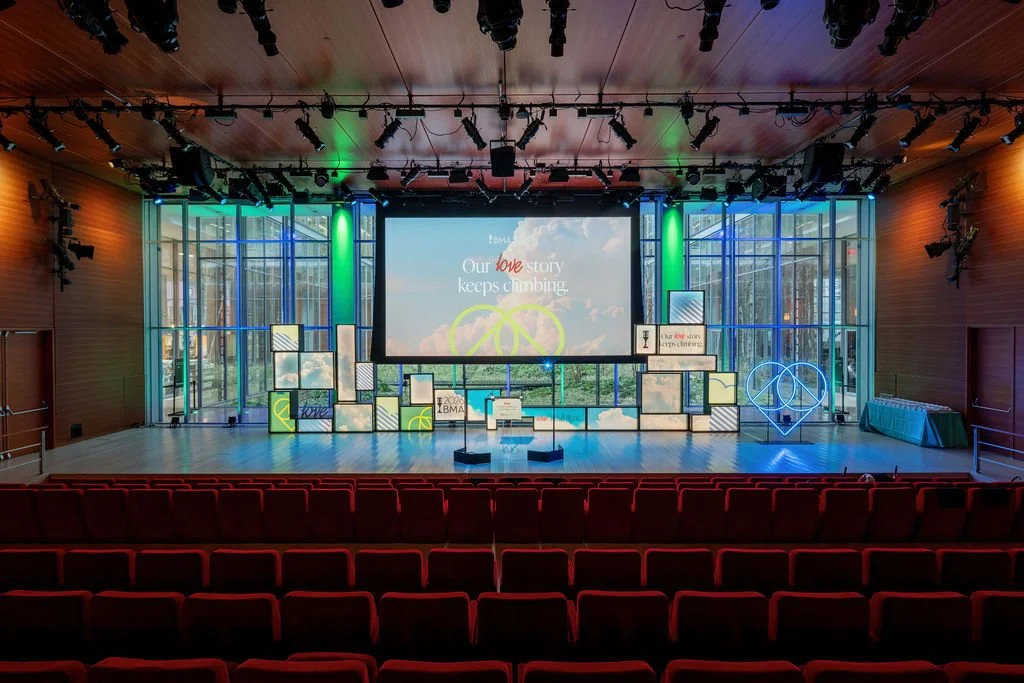
Stage environments act as visual framing devices. They guide attention. They reinforce authority. They influence how the audience interprets tone. Corporate event staging is not an aesthetic indulgence; it is a strategic positioning. General sessions are the anchor moments of conferences, summits, and annual meetings. They often include multiple speakers, panel discussions, and major announcements. General session staging must prioritize clarity and flexibility.
Key Considerations:
Scale:
The stage must feel proportionate to the room. A large ballroom requires layered scenic elements to avoid feeling empty. A more intimate setting demands precision and balance.
Sightlines:
Attendees in the back row must see clearly. Screen placement and stage height matter.
Presenter Flow:
With multiple speakers, transitions must feel seamless. Stage width should allow movement without clutter.
Brand Integration:
Subtle brand reinforcement through scenic texture, LED backdrops, or integrated lighting tones ensures cohesion without distraction.
General sessions typically require multi-screen integration and broadcast-ready framing, particularly for hybrid audiences.
Product Launch Staging: Drama, Reveal, Momentum
Product launches demand a different energy entirely. Where general sessions emphasize clarity and authority, product launch staging emphasizes anticipation, drama, and impact. Lighting shifts, controlled reveals, and immersive scenic design are often central to launch environments.
Key Elements of Product Launch Staging:
Controlled Lighting:
Dramatic lighting cues can build suspense before a reveal moment.
LED Wall Integration:
High-resolution LED displays allow dynamic content transitions and immersive storytelling.
Reveal Mechanisms:
Physical product reveals, scenic transitions, or content-driven unveilings create memorable moments.
Camera-First Design:
Product launches are often designed for media amplification. Stage proportions must work for broadcast, not just in-room attendees.
Product staging should amplify the story of innovation. It should feel intentional and cinematic.
Scenic Design, LED Walls, and Visual Architecture
Modern corporate event staging often incorporates modular scenic systems and LED walls. But technology alone does not guarantee impact.
The question is not whether to use LED — it’s how to use it strategically.
LED walls can:
- Create immersive brand environments
- Replace traditional scenic backdrops
- Enable dynamic content transitions
- Enhance remote viewing quality
However, overuse can flatten depth and remove architectural dimension. Layered scenic elements combined with LED integration often produce the most visually compelling results. Stage architecture should feel dimensional — not like a flat screen.
Lighting Design and Executive Presence
Lighting is one of the most powerful — and underestimated — components of corporate event staging.

Lighting impacts:
- Facial clarity
- Audience comfort
- Camera quality
- Emotional tone
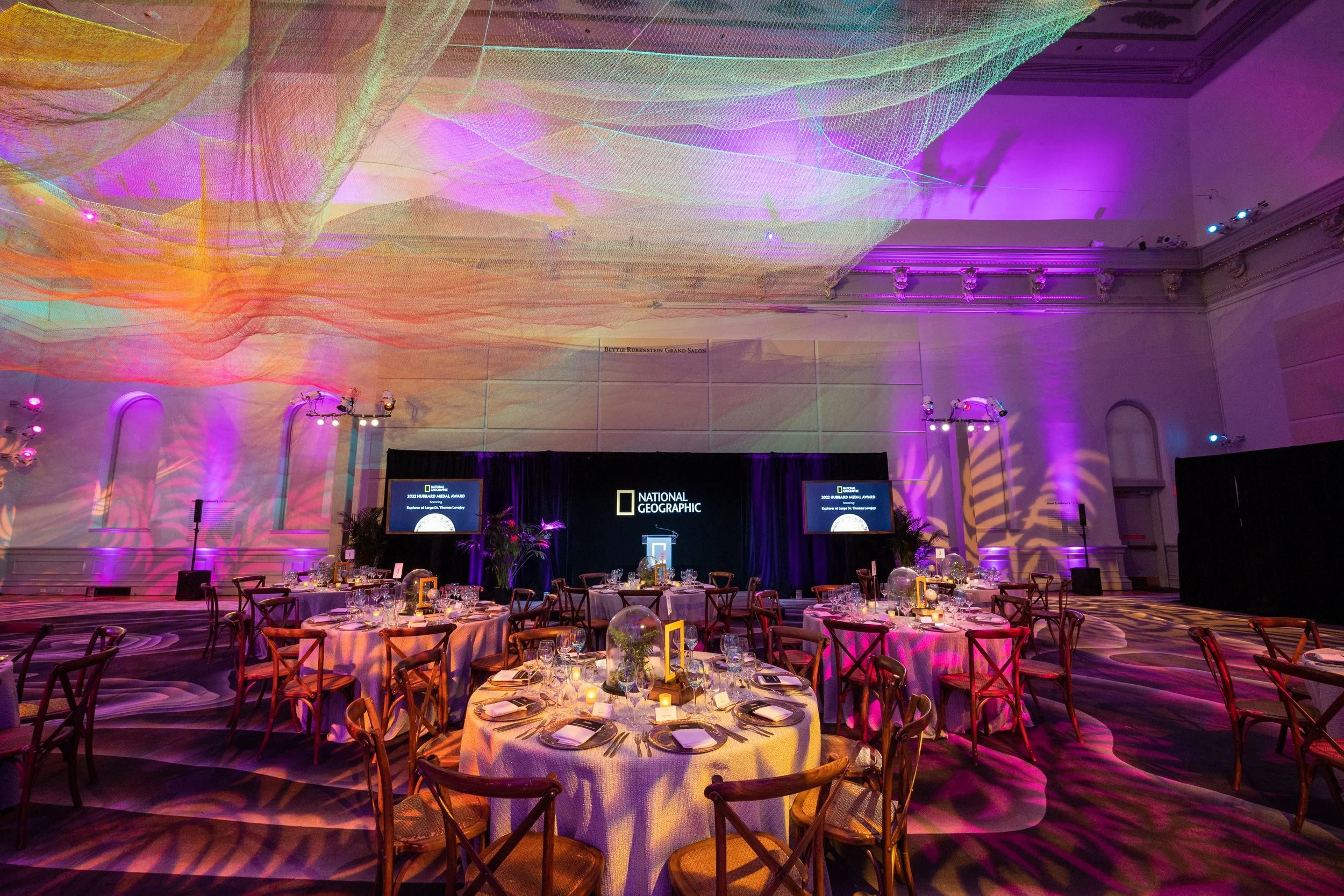
Executive presenters benefit from front-facing, flattering light that avoids harsh shadows. Panel discussions require balanced lighting across multiple seating positions. Subtle color shifts can reinforce thematic transitions throughout the program. Lighting is not just functional, it’s atmospheric.
Stage Layouts for Panels and Keynotes
Corporate events often include a mix of keynote addresses and panel discussions. Each format requires a different layout.
Keynote Staging
Requires clear sightlines, movement space, and strong central focus.
Panel Staging
Requires thoughtful seating arrangement, balanced lighting, and clean microphone management.
Cluttered stage layouts undermine credibility. Clean design enhances authority.
If your event includes recognition elements, our article on producing an elevated Award Dinner provides additional insight into designing stages for celebratory moments.
Hybrid and Broadcast-Ready Staging
Corporate event staging must now account for dual audiences: in-room and remote.
Hybrid staging considerations include:
- Camera placement
- Screen framing
- Depth and dimension for broadcast
- Presenter movement within frame
- Lighting that translates well on video
A stage that looks strong in-person may appear flat on camera if not designed intentionally.
Hybrid audiences expect broadcast-level quality. Corporate staging must meet that expectation.
Budget Considerations for Corporate Event Staging
Budget varies depending on scale, venue, and format.
Factors influencing staging cost include:
- Custom scenic fabrication
- LED wall size and resolution
- Lighting package complexity
- Rigging requirements
- Automation or reveal mechanisms
- Rehearsal time
General sessions may prioritize scale and clarity. Product launches may allocate more toward visual impact and dynamic effects. Strategic consultation ensures budget aligns with objective — not excess.
Our Event Strategy & Consulting approach ensures staging decisions are tied directly to business goals.
Choosing the Right Event Staging Partner
Corporate event staging requires collaboration between designers, technical directors, and strategic planners.
A strong staging partner should:
- Understand corporate messaging environments
- Integrate staging with production planning
- Prioritize safety and structural integrity
- Provide technical redundancy
- Offer creative solutions aligned with brand identity
Staging decisions affect everything from executive confidence to audience engagement.
Choose a partner who sees the stage as more than a platform.
Final Thoughts: The Stage Is the Message
Corporate event staging is not just physical construction. It is a strategic framework for communication.
From general sessions that reinforce authority to product launches that demand impact, staging shapes perception in real time.
When intentional, it elevates messaging. When overlooked, it undermines it.
If you’re planning a corporate event where presence, precision, and brand alignment matter, let’s design a stage environment that supports your vision — not just holds it.